
1、High-voltage interlock fault
2、Battery high-voltage interlock
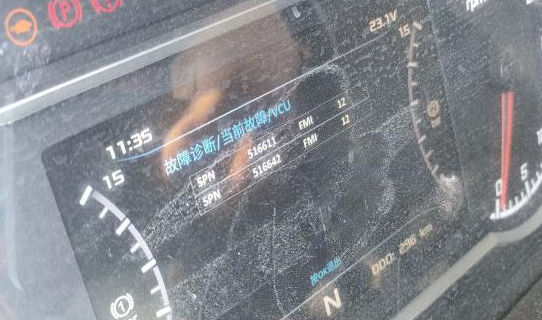
Use the resistance range of a multimeter and a piece of wire. Connect one end of the wire to the firewall 4X/48-6 and the other end to one of the test leads of the multimeter. Use the other test lead to check the continuity of each node along the way in turn until you find a node that is not connected. In this case, there is a problem with the wiring harness between this node and the previous node. If there is no problem with the continuity, check whether the fuse in the fuse box in the cab is intact after powering on. During the continuity check, carefully observe whether the wiring harness plug has any pin withdrawal.
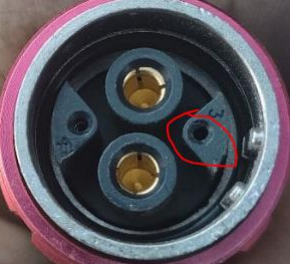
Troubleshooting results: The high-voltage plug of the air-conditioning compressor has withdrawn its pin.
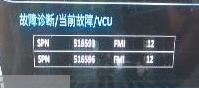
The vehicle cannot start, and the instrument VCU reports a secondary battery fault and a battery high-voltage interlock fault. The BMS detects a fault in the power battery high-voltage interlock circuit.
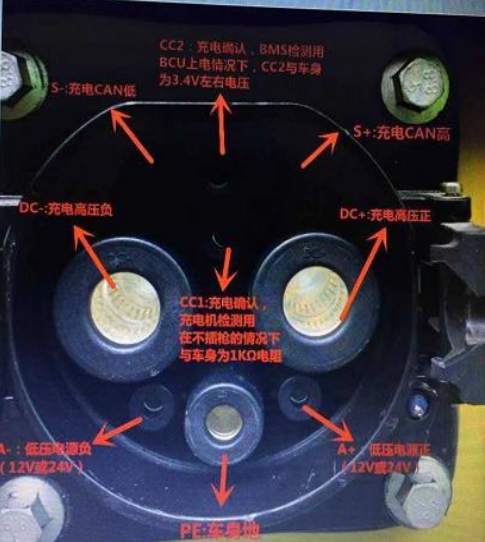
① Check whether the maintenance switch (MSD) is fully inserted and whether the two small pins on the MSD are conductive. ② Measure whether there is voltage at the charging port CC2, and whether there is voltage at A+ and A-.
Troubleshooting result: There is 24V voltage at the charging port A+. Check if the wiring harness of the battery swap base is worn or has cross-wires.
The instrument panel VCU reports fault 65734. The vehicle is limited in torque and cannot drive normally. This fault occurs after the vehicle replaces the driving recorder. It is suspected that the driving recorder causes the vehicle to limit torque.
The instrument panel VCU reports fault 65743. The fault code table does not contain this fault code. The data coordination technology analyzes the fault code and explains it as a financial lock passive lock fault. Reset the financial lock function of the driving recorder to eliminate the fault (refer to the replacement of the driving recorder for fuel vehicles with financial lock). The fault code for the financial lock passive lock is 100C6 is the hexadecimal fault code in the VCU DM1 message, and the fault code displayed on the instrument panel is decimal.