
1、Axle Gears and Mainshaft Gears
To ensure proper meshing of the dual countershaft gears with the mainshaft gears, gear alignment is required. This involves inserting the marked teeth on the two countershaft drive gears into the marked tooth grooves of the input shaft (one shaft) gear (each set consists of two adjacent teeth). See Figure.
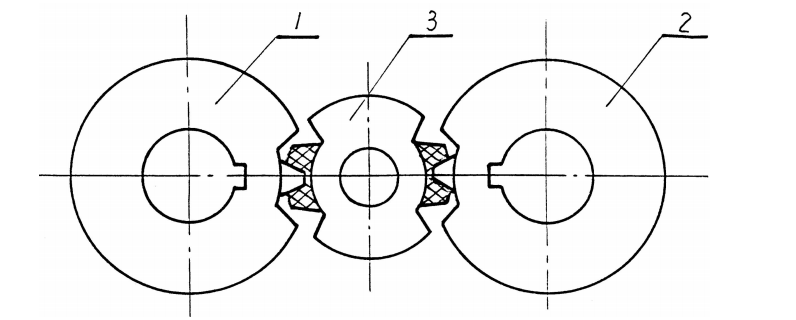
1.1. Left Countershaft Drive Gear
1.2. Right Countershaft Drive Gear
1.3. Input Shaft Gear
Aligning the auxiliary transmission gears follows the same method. The rear pair of gears is typically used for alignment. To facilitate alignment, the gears on the transmission input, mainshaft, and output shafts all have an even number of teeth. All gears in the S-series transmission have helical teeth, so alignment is crucial to prevent misalignment.
2.1. Make "gear alignment" marks on the teeth of the first gear gear on the second shaft at corresponding positions 180° apart. The number of teeth between the two sets of marks should be equal.
2.2. Make "gear alignment" marks on the teeth of the intermediate shaft (i.e., mark the top of the middle portion of the long teeth corresponding to the two "o" marks on the intermediate shaft).
2.3. During assembly, ensure that the marked teeth on the two intermediate shaft drive gears engage with the marked teeth on the left and right sides of the gear on the first shaft.