1、High Voltage Not Powering On
Reasons for vehicle power failure:
1.1 Is there a fault in the vehicle's insulation system?
1.2 Is the low-voltage 24V battery discharged?
1.3. Is the battery's BMS outputting high voltage?
1.4. Is the high-voltage distribution box functioning properly?
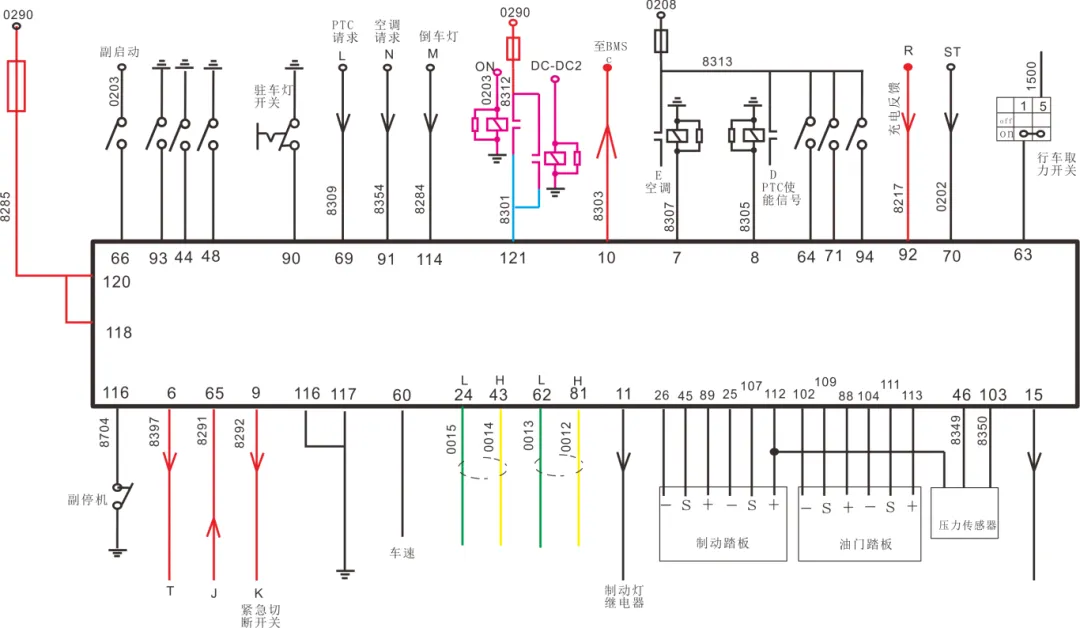
Checking BMS high-voltage output
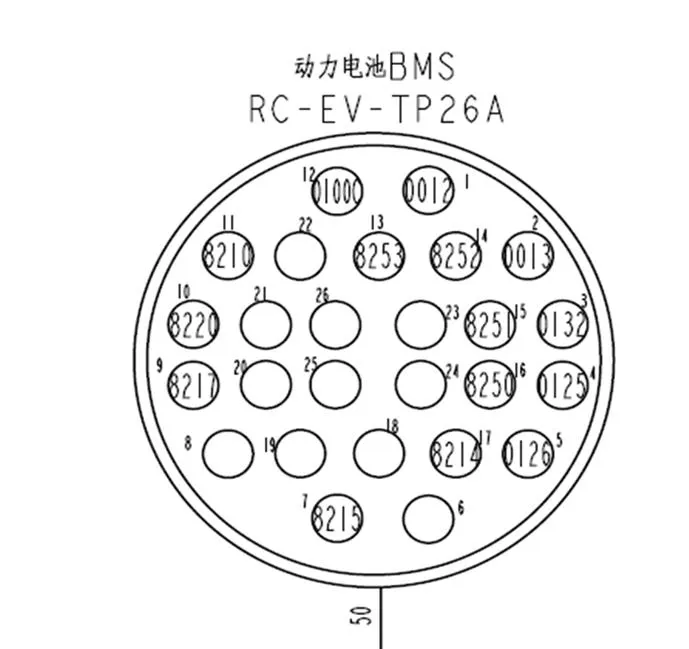
Pin 11 (8210)
Supplied by BMS relay 1 (ON signal)
Supplied by BMS relay 2 (DC-DC2)
Pin 17 (8214) is supplied by the emergency disconnect switch
Checking the high-voltage distribution box output
Pin K2 (8297) is supplied by the emergency disconnect switch
Pin K3 (0202) is supplied by the ignition lock
Confirm that pins K2 and K3 have power. The main positive relay in the high-voltage distribution box should be energized, and the high-voltage system should begin outputting power. K9 (8291) should begin outputting 24V. If the high-voltage system does not output power, replace the distribution box.
When the vehicle fails to charge: Cause:
2.1. Is the charging protocol correct? A standard charging station must be used.
2.2. Charging voltage range: 0-750V
2.3. Is the DC-DC2 functioning properly?
2.4. BMS box failure
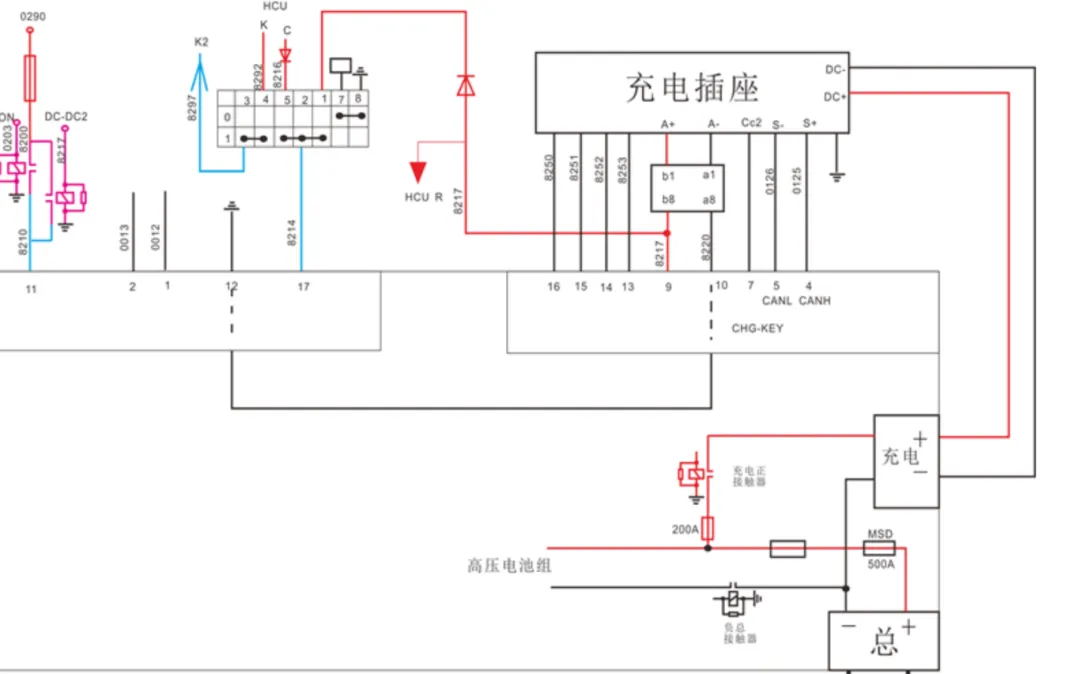
The HCU and BMS can only function properly when the DC-DC2 is functioning properly. Therefore, if charging is not working, you must confirm that the DC-DC2 is outputting 24V.
Also: If charging fails when the ignition is turned off, but charging resumes when the ignition is turned on, it can be quickly determined that the DC-DC2 relay is faulty, causing the failure.
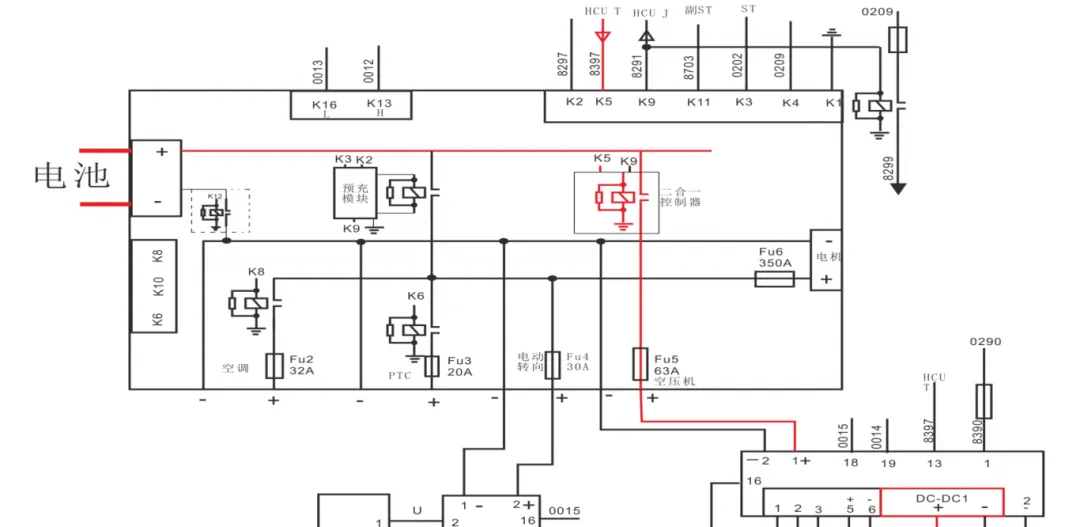
After the high-voltage system is powered on, the DC-DC1 in the two-in-one controller outputs a 27V voltage, replacing the original generator. When the battery is discharged, check whether the DC-DC1 is outputting 27V. If not, replace the two-in-one controller.
Adjust the knob to access miscellaneous queries
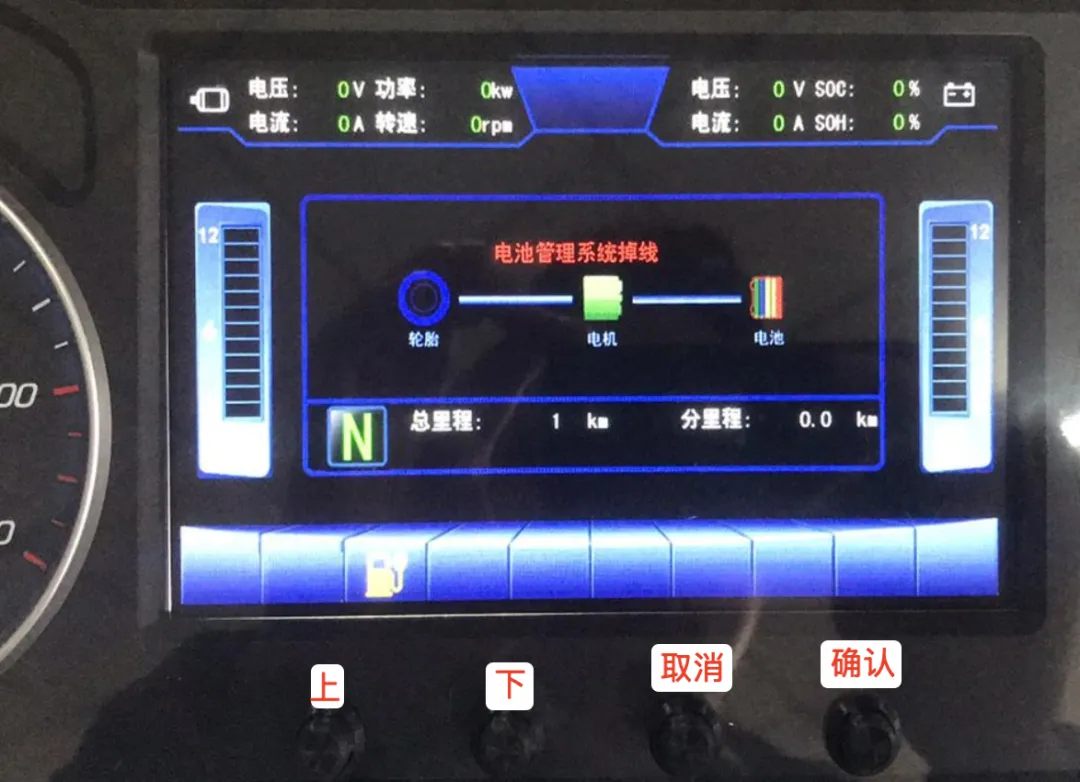
Adjust the knob to access each system to view faults
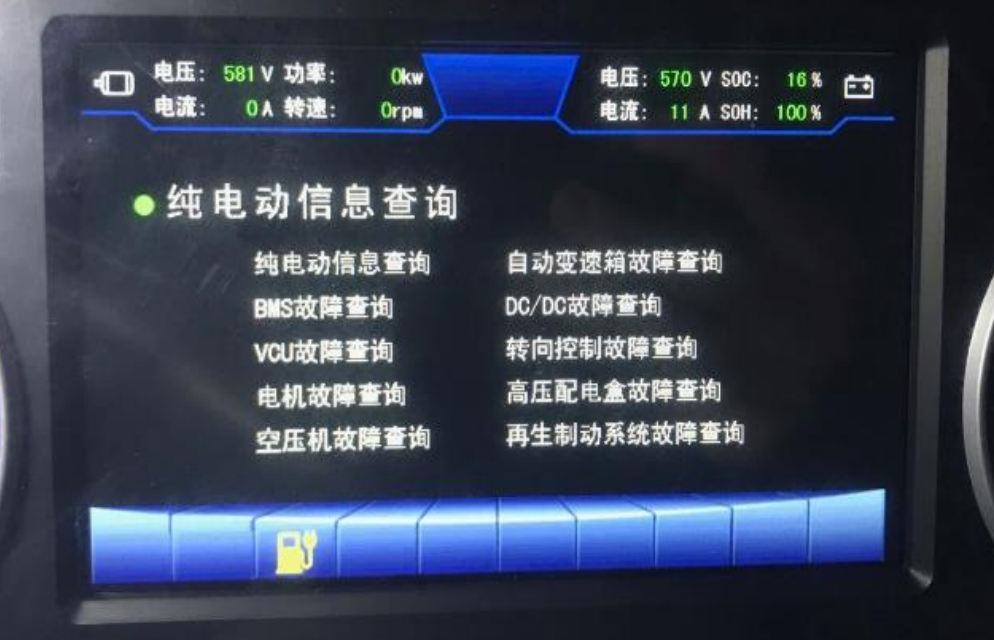
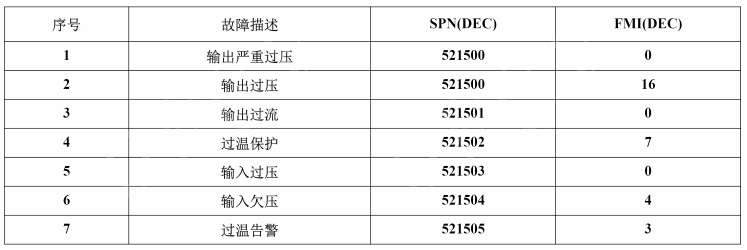
High-Voltage Distribution Box Fault Code Table
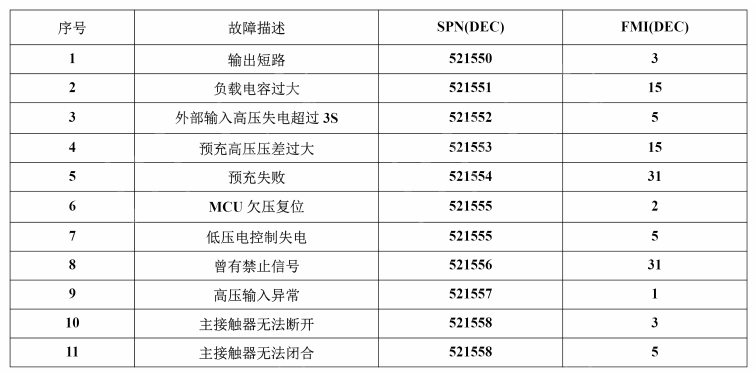
DC-DC Fault Code Table